How communication strategies and inclusive safety training strengthen teamwork and safety.
On today’s large-scale construction projects, crews often come from many countries, backgrounds, and languages. This diversity is a strength — it brings fresh ideas, varied experience, and new perspectives to every job site.
But when language and cultural differences are not managed effectively, they can lead to confusion, safety risks, and productivity challenges.
At Titan Consultants, we understand that effective communication
and inclusive safety training are key to successful project execution. Bridging cultural and language gaps is not just about translating instructions — it’s about building trust, respect, and shared understanding across every level of the workforce.
1. Clear Communication is the Foundation of Safety
Safety begins with understanding. When workers cannot fully grasp instructions, signage, or safety briefings, they are at greater risk of accidents or mistakes.
Foremen, SSHOs, and site managers must ensure that all communication — from toolbox talks to emergency procedures — is delivered in a way everyone understands.
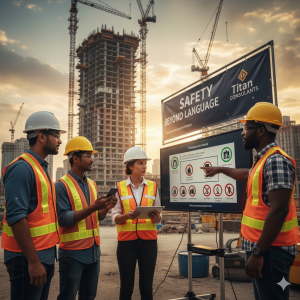
This can mean providing multilingual safety materials, using visuals and demonstrations, or pairing experienced bilingual workers with new team members. The goal is to make sure that no one is left guessing when it comes to safety.
2. Cultural Awareness Builds Stronger Teams
Cultural differences influence how workers interpret authority, communicate feedback, or approach problem-solving.
Leaders who take the time to understand these differences create more cohesive teams. Simple gestures — like learning basic greetings in a worker’s language, showing respect for cultural traditions, or celebrating shared successes — go a l
ong way in building unity.
When workers feel valued and understood, they’re more engaged, responsive, and cooperative — all of which directly improve safety and project outcomes.
3. Inclusive Safety Training Makes Every Worker Accountable
Traditional training often assumes a one-size-fits-all approach. However, for multinational crews, training must be inclusive, clear, and culturally aware.
Safety training should use plain language, visual aids, and interactive demonstrations to make complex topics easier to understand. Leaders should also encourage questions and feedback, ensuring that every worker — regardless of language — fully understands the expectations.
At Titan Consultants, we emphasize that safety isn’t just a policy; it’s a shared responsibility. Inclusive training ensures that everyone, from new hires to seasoned operators, plays their part in maintaining a safe job site.
4. Technology Enhances Cross-Cultural Communication
Modern tools such as translation apps, digital safety platforms, and mobile training systems make communication easier than ever.
With real-time translation and multilingual document access, leaders can quickly deliver accurate safety information to everyone on site.
Using digital platforms also ensures that records of training, certifications, and communications are properly documented — reducing compliance risks and keeping teams aligned.
5. Leadership Sets the Tone
Ultimately, successful communication on multinational sites starts with leadership.
When supervisors and managers make inclusion and clarity a priority, workers follow suit. Leaders must actively listen, provide consistent feedback, and encourage an environment where everyone feels safe to speak up — no matter their background.
At Titan Consultants, we believe that strong leadership bridges differences. By promoting understanding and collaboration, project leaders not only prevent incidents but also create a workplace where diversity drives success.
Conclusion: Safety Beyond Language
Cultural and language diversity can be a challenge, but it’s also one of the greatest asset
s in today’s construction industry. With the right communication strategies and inclusive training, every worker — regardless of background — can perform safely, confidently, and effectively.
Titan Consultants continues to support projects that prioritize communication, inclusion, and safety. Because when every voice is heard and understood, every job site becomes stronger, safer, and more successful.
