
How Jobsite Mental Health and Well-Being Programs Improve Safety and Productivity
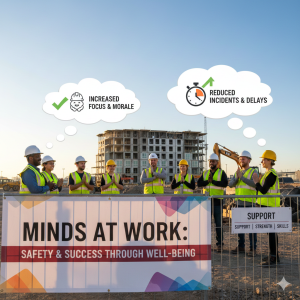
Construction safety programs traditionally focus on physical hazards, falls, equipment, confined spaces, and environmental risks. While these controls are essential, there is another critical factor that directly affects jobsite safety and performance: mental health and worker well-being.
Stress, fatigue, and burnout can quietly increase the risk of incidents on construction sites. As project schedules tighten and compliance demands grow, organizations that prioritize mental well-being alongside physical safety build stronger, safer, and more productive teams.
The Connection Between Mental Health and Jobsite Safety
Mental health plays a direct role in how workers perceive risk, follow procedures, and communicate on site. High stress levels can reduce focus, slow reaction times, and increase the likelihood of errors.
In construction environments, where decisions are often made quickly and hazards are constantly changing, reduced attention can lead to near-misses or serious incidents. Supporting mental well-being helps workers remain alert, engaged, and better prepared to respond to safety concerns.
Common Mental Health and Worker Well-being Challenges in Construction
Construction professionals face unique pressures that can impact well-being, including:
- Long work hours and demanding schedules
- Physically demanding tasks
- High-risk environments
- Project deadlines and performance pressure
- Extended time away from home
When left unaddressed, these challenges can lead to fatigue, stress, anxiety, and decreased morale, factors that directly affect safety performance.
Benefits of Mental Health and Well-Being Programs
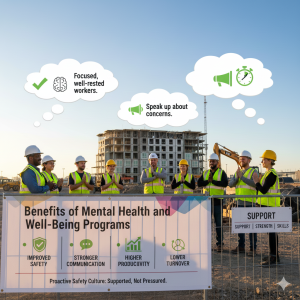
Integrating mental well-being into safety programs provides measurable benefits across projects:
- Improved safety performance: Focused, well-rested workers make safer decisions.
- Stronger communication: Workers are more likely to speak up about hazards or concerns.
- Higher productivity: Reduced stress improves efficiency and task execution.
- Lower turnover: Supportive environments improve job satisfaction and retention.
Well-being programs reinforce a proactive safety culture where workers feel supported, not pressured.
Practical Ways to Support Mental Well-Being on Jobsites
Construction companies can take meaningful steps to support mental health without disrupting operations:
- Encourage regular breaks and fatigue management
- Promote open communication between supervisors and crews
- Provide access to Employee Assistance Programs (EAPs)
- Offer stress management or resilience training
- Train leaders to recognize signs of burnout and fatigue
Even small changes can make a significant difference when consistently applied.
Leadership’s Role in Building a Healthy Safety Culture
Leadership sets the tone for jobsite culture. When supervisors and managers openly prioritize mental well-being, workers are more likely to engage and seek support when needed.
Clear communication, realistic scheduling, and visible commitment to worker well-being help reinforce trust and accountability. This leadership approach strengthens both safety compliance and overall project performance.
Mental Well-Being and Compliance Programs

Mental health initiatives complement existing safety and compliance programs such as OSHA and EM 385-1-1 requirements. While regulations focus on physical hazards, addressing human factors strengthens overall risk management.
A workforce that is mentally prepared is better equipped to follow procedures, recognize hazards, and maintain compliance across all project phases.
A Smarter Approach to Construction Safety
Modern construction safety programs go beyond checklists and inspections. By recognizing the role of mental health and well-being, organizations can reduce risk, improve productivity, and create safer jobsites.
At Titan Consultants, safety is about protecting people, not just meeting requirements. Supporting mental well-being is an essential step toward building stronger teams and more successful projects.
Construction safety programs traditionally focus on physical hazards, falls, equipment, confined spaces, and environmental risks. While these controls are essential, there is another critical factor that directly affects jobsite safety and performance: mental health and worker well-being.
Stress, fatigue, and burnout can quietly increase the risk of incidents on construction sites. As project schedules tighten and compliance demands grow, organizations that prioritize mental well-being alongside physical safety build stronger, safer, and more productive teams.
The Connection Between Mental Health and Jobsite Safety
Mental health plays a direct role in how workers perceive risk, follow procedures, and communicate on site. High stress levels can reduce focus, slow reaction times, and increase the likelihood of errors.
In construction environments—where decisions are often made quickly and hazards are constantly changing—reduced attention can lead to near-misses or serious incidents. Supporting mental well-being helps workers remain alert, engaged, and better prepared to respond to safety concerns.
Common Mental Health Challenges in Construction
Construction professionals face unique pressures that can impact well-being, including:
- Long work hours and demanding schedules
- Physically demanding tasks
- High-risk environments
- Project deadlines and performance pressure
- Extended time away from home
When left unaddressed, these challenges can lead to fatigue, stress, anxiety, and decreased morale—factors that directly affect safety performance.
Benefits of Mental Health and Well-Being Programs
Integrating mental well-being into safety programs provides measurable benefits across projects:
- Improved safety performance: Focused, well-rested workers make safer decisions.
- Stronger communication: Workers are more likely to speak up about hazards or concerns.
- Higher productivity: Reduced stress improves efficiency and task execution.
- Lower turnover: Supportive environments improve job satisfaction and retention.
Well-being programs reinforce a proactive safety culture where workers feel supported, not pressured.
Practical Ways to Support Mental Health and Worker Well-being on the Jobsite
Construction companies can take meaningful steps to support mental health without disrupting operations:
- Encourage regular breaks and fatigue management
- Promote open communication between supervisors and crews
- Provide access to Employee Assistance Programs (EAPs)
- Offer stress management or resilience training
- Train leaders to recognize signs of burnout and fatigue
Even small changes can make a significant difference when consistently applied.
Leadership’s Role in Building a Healthy Safety Culture
Leadership sets the tone for jobsite culture. When supervisors and managers openly prioritize mental well-being, workers are more likely to engage and seek support when needed.
Clear communication, realistic scheduling, and visible commitment to worker well-being help reinforce trust and accountability. This leadership approach strengthens both safety compliance and overall project performance.
Mental Well-Being and Compliance Programs
Mental health initiatives complement existing safety and compliance programs such as OSHA and EM 385-1-1 requirements. While regulations focus on physical hazards, addressing human factors strengthens overall risk management.
A workforce that is mentally prepared is better equipped to follow procedures, recognize hazards, and maintain compliance across all project phases.
A Smarter Approach to Construction Safety
Modern construction safety programs go beyond checklists and inspections. By recognizing the role of mental health and well-being, organizations can reduce risk, improve productivity, and create safer jobsites.
At Titan Consultants, safety is about protecting people—not just meeting requirements. Supporting mental well-being is an essential step toward building stronger teams and more successful projects.
