
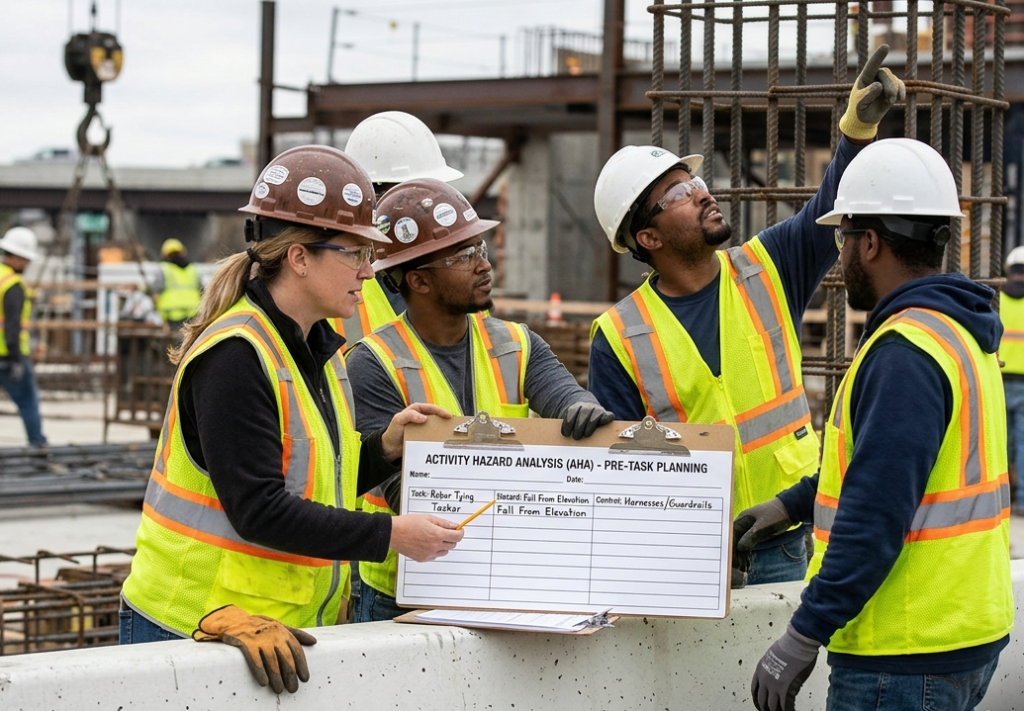
Why Activity Hazard Analysis Is Required Before Work Begins
Construction projects involve complex tasks, heavy equipment, and constantly changing environments. Therefore, careful planning must occur before any activity begins. One of the most effective safety planning tools used in high-risk industries is the Activity Hazard Analysis AHA. This process allows safety professionals to identify potential hazards and implement control measures before work starts. In addition, the Activity Hazard Analysis AHA ensures workers clearly understand the risks associated with their tasks.
Because construction environments change quickly, crews must identify hazards before they create dangerous situations. Consequently, many government construction projects require documented hazard analysis before work activities begin. Pre-task planning improves communication, strengthens safety awareness, and prevents accidents on the jobsite.
Understanding the Purpose of an Activity Hazard Analysis
An Activity Hazard Analysis AHA identifies potential hazards associated with a specific work activity. Furthermore, it outlines the control measures required to prevent injuries or incidents.
First, supervisors divide the job into individual work steps. Next, the team reviews each step to identify possible hazards. After that, they determine appropriate safety controls. As a result, workers understand the risks and the procedures required to perform the work safely.
For example, excavation work may involve several hazards. These hazards may include cave-ins, equipment movement, underground utilities, or falling materials. Therefore, the analysis defines protective systems, equipment procedures, and required protective equipment.
Because crews review the plan before work begins, everyone understands the safety expectations. Consequently, the work proceeds more efficiently and safely.
Why Pre-Task Hazard Planning Matters
Pre-task planning improves safety performance across construction projects. More importantly, it helps crews prevent accidents before they occur.
First, hazard identification improves worker awareness. When workers understand the risks, they remain more alert and cautious during operations. In addition, supervisors reinforce safe procedures during daily planning meetings.
Second, structured planning improves communication between management and field workers. When teams review the Activity Hazard Analysis AHA, they clarify responsibilities and safety expectations.
Third, early planning reduces unexpected hazards. By identifying risks in advance, teams implement controls that protect workers and equipment.
Finally, hazard planning supports regulatory compliance. Government agencies often require documented safety procedures before work begins. Therefore, contractors must prepare a complete analysis before performing certain tasks.
Key Elements of an Effective Hazard Analysis
An effective Activity Hazard Analysis AHA contains several important components that support safe operations.
Task Breakdown
First, the team divides the activity into clear work steps. This approach allows safety professionals to evaluate each stage of the task carefully.
Hazard Identification
Next, the team identifies hazards associated with each step. These hazards may involve equipment movement, environmental conditions, or worker exposure.
Safety Control Measures
After identifying hazards, the team establishes protective measures. These measures may include engineering controls, protective equipment, or safe work procedures.
Worker Communication
Finally, supervisors review the analysis with workers before work begins. This discussion ensures everyone understands the hazards and safety controls.
Because teams follow this structured process, they reduce confusion and strengthen workplace safety.
The Role of Supervisors in Hazard Planning
Supervisors play a major role in implementing safety planning procedures. First, they prepare the Activity Hazard Analysis AHA before work begins. Then, they review the document with the crew during safety meetings.
During these discussions, supervisors explain each task step and its associated hazards. In addition, workers may ask questions or provide feedback. As a result, teams improve both understanding and hazard awareness.
Furthermore, supervisors monitor the work activity to ensure workers follow safety procedures. If conditions change, they update the analysis immediately. This approach keeps safety planning accurate throughout the project.
Best Practices for Effective Hazard Analysis
Organizations that consistently improve safety performance often follow several planning strategies.
First, they complete the analysis well before work begins. Early preparation allows teams to evaluate hazards thoroughly.
Second, they involve workers in the planning process. Workers often identify practical risks that may not appear during office planning.
Third, they review hazard analyses daily. Frequent reviews reinforce safety expectations and remind crews about critical hazards.
Finally, they update the document whenever site conditions change. Continuous improvement keeps hazard planning effective.
Because teams follow these practices, they create safer work environments and reduce workplace incidents.
Strengthening Safety Through Pre-Task Planning
Every construction activity contains potential risks. However, proper planning allows crews to control those risks effectively. The Activity Hazard Analysis AHA provides a structured method for identifying hazards, planning safety controls, and communicating procedures before work begins.
When supervisors and workers review the analysis together, they strengthen teamwork and safety awareness. As a result, projects operate more efficiently while protecting workers from preventable injuries.
Strong hazard planning supports safer worksites, improved compliance, and better project outcomes. Therefore, organizations that prioritize pre-task planning build stronger safety cultures across every jobsite.
