
Construction Safety
Cold Weather Construction Safety: How to Protect Your Crew This Winter
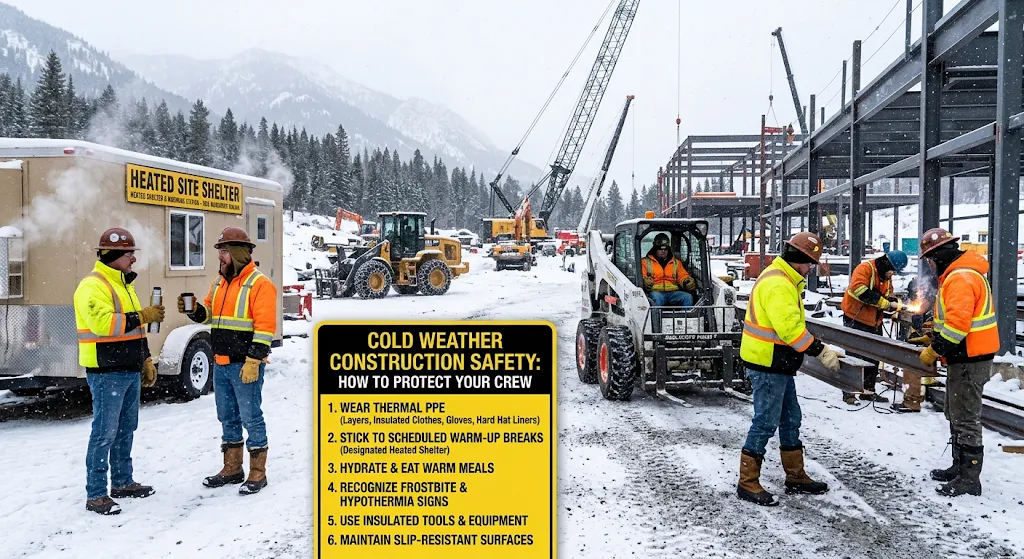
Winter brings shorter days, icy surfaces and freezing wind. For crews working outside, cold weather construction safety becomes a daily priority.
Cold weather does more than make the job uncomfortable. It slows reaction time, numbs hands and raises the risk of serious injury.
As a result, a job site that runs smoothly in summer can become dangerous once temperatures drop. Fortunately, a few simple steps can keep your crew safe all season.
Understanding Cold Stress on the Job Site
Cold stress happens when the body loses heat faster than it can replace it. Wind, rain and wet clothing make it worse, even when the temperature does not seem extreme. In fact, wet conditions can cause problems well above freezing.
Here are the three main types of cold stress to watch for.
Hypothermia
With hypothermia, body temperature drops too low. Early signs include shivering, slurred speech and confusion. Later, shivering may stop, which means the condition is getting worse.
Frostbite
Frostbite freezes skin and tissue, most often on fingers, toes, ears and the nose. Watch for numbness and pale, waxy or hard skin.
Trench Foot
Trench foot sets in when feet stay cold and wet for long periods. Signs include redness, swelling, numbness and blisters.
If a worker shows signs of cold stress, move them to a warm area, remove wet clothing and get medical help right away. For more detail, see the government's cold stress guidance.
Cold Weather Construction Safety Starts With the Right Gear
First and foremost, dress for the conditions. Layers work best because crews can adjust as the day warms up or cools down.
Base layer: Choose moisture-wicking fabric that pulls sweat away from the skin.
Middle layer: Add fleece or wool for warmth.
Outer layer: Finish with a windproof, waterproof jacket in a high-visibility color.
Extras: Bring insulated gloves, a hard hat liner, warm socks and waterproof boots with good tread.
In addition, keep a spare set of dry clothes on site. Wet clothing pulls heat from the body much faster than dry clothing.
Schedule Breaks and Warm-Up Areas
Even well-dressed crews need time to warm up. Therefore, plan regular breaks in a heated area, especially on windy days. Warm drinks help too, while caffeine and alcohol can speed up heat loss.
Also, try to schedule the hardest outdoor work for the warmest part of the day. A buddy system helps as well, because a partner often spots the early signs of cold stress first.
Prevent Slips, Trips and Falls on Ice
Ice and frost make slips and falls one of the most common winter injuries. For that reason, walk the site each morning and check walkways, ramps, stairs and scaffolding before work starts.
Clear away snow, then spread salt or sand on icy surfaces. On slick ground, remind crews to take shorter, slower steps.
Ladders and equipment call for three points of contact at all times. Before anyone climbs up, clear ice from scaffold planks and working surfaces.
Plan for Shorter Days and Low Light
Winter means crews often start and finish in the dark. As a result, poor visibility raises the risk of falls and equipment accidents.
To help, add temporary lighting to walkways, work areas and parking lots, and make sure every worker wears high-visibility gear. Likewise, remind equipment operators to slow down and use spotters when visibility drops.
Use Temporary Heaters Safely
Portable heaters keep work areas warm, but they bring their own hazards. Fuel-burning heaters release carbon monoxide, an odorless gas that can be deadly in enclosed spaces.
Never run these heaters in enclosed areas without proper ventilation. Wherever they run, monitor the air for carbon monoxide.
Placement matters too, so keep heaters away from flammable materials and fuel storage. Finally, inspect heaters and fuel lines before each use.
The Safety Officer's Role in Winter
On federal projects, the Site Safety and Health Officer leads the effort to keep crews safe through the cold months. For example, they update activity hazard analyses to cover cold weather risks before winter work begins.
In addition, the Safety Officer leads toolbox talks on cold stress, checks the forecast and wind chill daily, and inspects heaters, walkways and scaffolding. When conditions get too dangerous, they work with the superintendent to adjust or pause the work.
To learn more about this role, read why your Quality Control Manager and Safety Officer can make or break a federal project, or see what a construction superintendent does.
Keep Your Crew Safe All Winter
Cold weather construction safety comes down to planning, the right gear and a strong safety culture. With trained leadership on site, crews can work through the winter without putting their health at risk.
Need an experienced Site Safety and Health Officer for your winter project? Titan Consultants & Engineers provides qualified safety professionals with current certifications for federal and commercial projects nationwide. Our safety officers also complete annual training through eCertify.
Frequently Asked Questions
What is cold stress in construction?
Cold stress happens when cold, wind and wet conditions drain body heat faster than the body can replace it. It can lead to hypothermia, frostbite and trench foot.
At what temperature should construction crews take extra precautions?
There is no single cutoff. Wind, rain and wet clothing raise the risk even in mild temperatures, so crews should watch the wind chill and conditions, not just the thermometer.
Are portable heaters safe on a construction site?
They can be, with care. Because fuel-burning heaters release carbon monoxide, keep them out of enclosed spaces unless ventilation and air monitoring are in place.
Who is responsible for cold weather safety on a federal project?
Everyone plays a part, but the Site Safety and Health Officer leads the effort by updating hazard analyses, training crews and monitoring conditions every day.
Need a safety officer this winter?
Tell us about your project, and we will get a qualified Site Safety and Health Officer on your job site quickly.
Request a Quote